Can Invisalign Fix Relapse After Previous Braces?
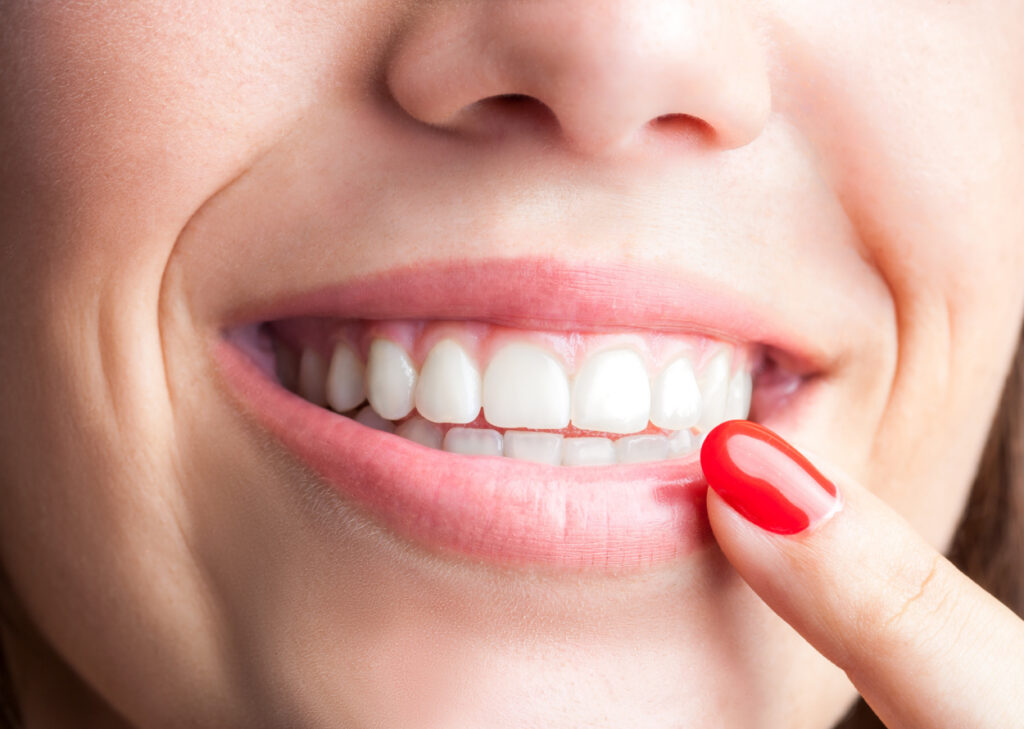

For many adults, relapse feels deeply unfair. They wore braces for years, sat through adjustments, counted down the days until debonding, and then, somewhere along the line, their teeth began to shift again. Sometimes it happens gradually and almost invisibly. A lower front tooth starts to overlap. A small gap reappears near an incisor. The bite feels a little different when chewing, or old photos reveal that the smile used to look more even. The obvious question follows: can Invisalign fix it?
In many cases, yes. Invisalign can be a very effective way to correct orthodontic relapse after traditional braces. But that answer needs context, because not every relapse is the same, and not every patient is a straightforward aligner case. The amount of movement needed, the condition of old dental work, the current bite, the health of the gums and bone, and the reason the teeth moved in the first place all matter.
I have seen patients come in convinced they need full braces again, only to find that a modest Invisalign plan can get them back on track. I have also seen the opposite, where the relapse looked small in the mirror but involved enough bite change that aligners alone were not the smartest tool. The best answer is less about the brand name and more about biology, mechanics, and realistic treatment planning.
Why relapse happens after braces
Orthodontic relapse is common enough that most dentists and orthodontists speak about it very plainly. Teeth are not set into concrete after treatment. They sit in living bone, held by fibers and surrounded by tissue that can adapt, remodel, and respond to pressure over time. That is why braces work in the first place. It is also why teeth can drift later.
The most frequent reason is simple: retainers were not worn consistently, or were lost and never replaced. This is not a moral failure, just a common human one. Life changes. College happens. A move happens. A dog chews the retainer. A clear retainer cracks and sits in a bathroom drawer for eight months. Many relapse stories begin that way.
But retainers are not the whole picture. Wisdom teeth are often blamed for crowding, though their role tends to be overstated. Natural aging also matters. Teeth can shift subtly throughout adulthood, especially the lower front teeth. Bite forces, grinding, tongue posture, gum disease, missing teeth, and old restorations can all contribute. In some patients, the original orthodontic result was good but biologically unstable, which means the teeth were aligned in a way that required faithful long-term retention to hold.
That last point is important because it changes expectations. If relapse happened once, the long-term retention plan after retreatment has to be taken seriously. Invisalign can move the teeth back, but it cannot by itself solve the habits or structural issues that caused the movement.
When Invisalign works particularly well
Invisalign is often at its best when relapse is mild to moderate. That includes small rotations, minor crowding, spaces that reopened after braces, and front teeth that no longer line up as they once did. Adults who had braces as teenagers often fall into this category. Their teeth were previously aligned, so the amount of correction needed may be modest, and the movement pattern is familiar.
A classic example is lower incisor crowding. Someone had braces at 14, stopped wearing the retainer in college, and by 30 the bottom front teeth overlap enough to bother them in photos. If the bite is otherwise reasonable and the gums are healthy, Invisalign can often address that efficiently. Treatment time may be measured in months rather than years, though every case varies.
Another good scenario is reopening of small spaces. After braces, a tiny gap between the upper front teeth or near extraction sites may return. Aligners can close those spaces, and because the trays are full-coverage, they can offer good control if the plan is designed carefully. That said, spacing relapse can be stubborn if there is a tongue thrust habit or an unresolved frenum issue, so retention and habit management matter.
Adults also tend to like Invisalign for practical reasons. The aligners are removable, which makes eating and brushing easier than with fixed braces. For professionals, especially those who speak frequently in meetings or spend time face-to-face with clients, the appearance is often a real advantage. People who already had metal braces once are often unenthusiastic about doing that again.
When Invisalign may not be the best answer
Not all relapse is simple. If the bite has changed significantly, if there is substantial tooth tipping, if back teeth need large movements, or if there are vertical issues such as open bite or deep bite that have become more pronounced, the case becomes more demanding. Invisalign can still work in some of these situations, but it requires a more sophisticated plan, excellent patient compliance, and sometimes attachments, elastics, or refinement stages that patients do not initially expect.
There are also situations where fixed braces may offer better control. Severe rotations, certain root movements, and complex bite corrections can be more predictable with braces in some hands and for some anatomies. This is not a knock on aligners. It is a recognition that orthodontics is not just about straightening what shows in the smile. It is about where the roots sit, how the bite meets, and whether the final result will be stable and healthy.
Periodontal health can be another limiting factor. Adults with gum recession or bone loss need careful evaluation before any https://titusbizi588.bearsfanteamshop.com/will-invisalign-work-for-deep-bite-correction retreatment. Teeth with reduced support can sometimes be moved safely, but the plan must respect those limits. Sometimes the relapse that bothers the patient visually is actually a sign of a bigger periodontal issue, not just an alignment problem.
Then there is dental work. Crowns, bridges, implants, veneers, and bonded retainers all affect what is possible. An implant, for example, does not move orthodontically. If a natural tooth next to an implant has drifted, the plan must work around a fixed point. That is manageable, but it changes the mechanics. Old crowns may not grip attachments as predictably. Veneers require thoughtful handling during refinement and retention.
The first question a good provider asks
A strong Invisalign retreatment plan starts with diagnosis, not software. The best clinicians do not just scan the teeth and hit approve. They ask why the relapse happened and what the patient actually wants fixed.
Those are not always the same thing. A patient may point to one crooked front tooth, while the larger problem is a shifting bite caused by nighttime grinding. Another may say, “I just want the top teeth straight again,” but the lower arch is the reason the upper teeth relapsed. Sometimes the smartest plan is not comprehensive retreatment. It may be limited treatment with very specific goals, especially if the patient understands the trade-offs.
That conversation matters because adults vary widely in tolerance for treatment length, attachment visibility, retainer commitment, and refinement. Some patients want the best possible bite and are happy to wear aligners for a year or more. Others want a cosmetic touch-up and accept that the result will be improved rather than textbook perfect. Neither approach is wrong if the limitations are honestly discussed.
How much relapse can Invisalign realistically fix?
This depends less on the age of the patient and more on the kind of movement required. Teeth can be moved orthodontically in healthy adults well into later decades of life. The old belief that braces are mainly for teenagers no longer reflects everyday practice. Adults routinely undergo successful orthodontic treatment, including retreatment after prior braces.
For minor relapse, Invisalign can be remarkably effective. A slight overlap, a reappearing diastema, or a small rotation often responds well. Moderate relapse can also be very manageable, especially if the arches are broadly sound and the bite needs only limited adjustment.
Where expectations sometimes go sideways is with relapse that appears small from the front but is mechanically more involved. A patient may see one front tooth out of line, yet correcting it may require creating space elsewhere, adjusting neighboring teeth, or rebalancing the bite. This is why treatment times can surprise people. The visible problem may take one inch of movement, but the hidden setup behind it takes much more.
One practical point worth knowing is that retreatment after previous braces does not always mean a shorter case. It often can be shorter, especially if the goals are focused, but not automatically. Teeth that have moved back into crowded positions do not carry a memory that makes them easier to correct. Biology responds to current forces, not nostalgia.
Invisalign versus braces for relapse
Patients often frame this as a simple preference question, but the decision is usually about control, predictability, and compliance. Invisalign gives patients flexibility and aesthetics. Braces give the clinician constant force delivery without relying on the patient to remember tray wear. That difference matters more than marketing.
A patient who wears aligners 20 to 22 hours a day, changes them on schedule, and follows instructions closely can get excellent results. A patient who leaves them out for long lunches, forgets them on weekends, or skips ahead through trays will struggle, particularly with retreatment cases where precision matters. One of the common frustrations I hear is, “I wanted the convenience of Invisalign, but I did not realize how disciplined I had to be.” That is an honest tension, not a flaw in the system.
For someone who knows they are unlikely to wear aligners reliably, braces may actually be the more efficient and less stressful option. For someone with mild relapse and strong motivation, Invisalign is often a very appealing choice.
What treatment usually looks like
The process usually begins with a clinical exam, photographs, and a digital scan. Many providers will also want radiographs to evaluate roots, bone levels, restorations, and any pathology that could affect tooth movement. If there is a bonded retainer from previous braces, the provider will decide whether it should stay in place, be modified, or be removed before treatment.
From there, a digital plan is created. This is where experience matters. A polished animation can make movement look easy, but real teeth do not always move exactly on screen. Good planning accounts for relapse patterns, overcorrection where appropriate, attachment placement, and the possibility of refinement.
Many retreatment cases need attachments, those small tooth-colored shapes bonded to certain teeth so the aligners can grip and guide movement more precisely. Patients sometimes hope for “attachment-free Invisalign,” but that is often unrealistic if the goal is a predictable result. Short elastics may also be used if bite correction is needed.
Treatment time varies widely. Mild relapse might take a few months. More moderate correction can take closer to a year, sometimes longer if refinements are needed. Refinement is not a sign that something failed. It is a normal part of aligner treatment in many cases, especially when detail and bite settling matter.
The retention piece is where most people learn the real lesson
The hard truth is that if someone had braces, relapsed, and then used Invisalign to fix the relapse, retention afterward is not optional in the casual sense. It becomes a lifetime maintenance issue.
That does not mean wearing active aligners forever. It means having a clear, durable retainer plan and actually following it. For many adults, nighttime retainer wear indefinitely is the baseline. Some will also benefit from a bonded retainer on the lower front teeth, especially if that area was the main relapse site. Even then, bonded retainers are not magic. They can break, collect calculus, or allow subtle movement if only part of the wire fails.
One of the most useful habits I recommend to patients after retreatment is simple awareness. If the retainer starts feeling tight after missing a few nights, that is your warning sign. Teeth are telling you they still want to move. That is not the moment to hope for the best. It is the moment to resume wear and, if needed, call the office before the retainer no longer seats fully.
Cost, convenience, and whether retreatment is worth it
Adults often ask this more carefully than teenagers ever did, because they are paying for it themselves and fitting treatment into work, family, and travel. Invisalign for relapse is often worth it when the movement affects confidence, hygiene, or bite comfort. Crooked lower incisors are harder to clean. Reopened spaces can trap food. A changed bite can sometimes contribute to wear patterns or functional annoyance, though not every shifted tooth becomes a health crisis.
The financial side depends on the complexity of the case, the provider’s experience, local market, and whether the treatment is limited or comprehensive. A small touch-up may cost notably less than full orthodontic retreatment, but that is not guaranteed. Some patients are surprised to learn that a “quick fix” still requires serious planning, monitoring, and retention.
Convenience is where Invisalign often shines. Adults who travel, attend frequent meetings, or simply do not want brackets again may find the removable format easier to live with. Still, convenience has a price in discipline. If your work involves constant coffee, long meals with clients, or inconsistent routines, the practical burden of aligner wear should be discussed honestly before starting.
Situations that call for a more nuanced plan
There are edge cases that deserve special attention. Patients with prior extractions may need careful management if spaces have reopened or if arch form changed over time. Patients with TMJ symptoms need evaluation, because while orthodontic retreatment may improve the bite relationship in some cases, it is not a guaranteed fix for joint pain. People with heavy clenching can distort aligners, crack retainers, and drive relapse if the force patterns are not addressed.
Another common scenario is the patient who wants only upper treatment because the upper teeth show in photos, while the lower crowding and bite relationship are the real drivers. Sometimes single-arch treatment is reasonable. Sometimes it creates compromises that are not worth it. This is exactly where an experienced orthodontic opinion becomes valuable. The best plan is not always the most limited one.
I have also seen patients who delayed retreatment for years because they felt embarrassed that their teeth shifted after braces. That embarrassment is misplaced. Relapse is common. Providers see it constantly. The better approach is to catch it early, when the correction is often simpler and the retention reset is easier.
Signs you may be a good candidate
If your teeth were previously straight, the current shift is mild to moderate, your gums are healthy, and you are willing to wear aligners as directed, Invisalign is often a strong option. The fit is especially good for adults who value aesthetics and can commit to retainer wear long term afterward.
If your bite feels markedly off, you have significant crowding, missing teeth, implants in the area, active gum disease, or a history of poor compliance with removable appliances, you may still be treatable, but the conversation should be more detailed. In those cases, “Can Invisalign fix relapse?” becomes “What is the best way to fix this relapse safely and predictably?”
That distinction matters. The brand is the tool. The diagnosis is the strategy.
What to ask at your consultation
A useful consultation should leave you with a clear picture of the problem, the options, and the maintenance required. Ask what caused the relapse, how much movement is being proposed, whether Invisalign is the most predictable route, and what happens if refinements are needed. Ask about attachments, elastics, treatment length, and the retainer plan after completion. If you have crowns, veneers, implants, or a bonded retainer, make sure those are part of the discussion from the start.
Most importantly, ask what level of improvement is realistic. Sometimes the answer is excellent. Sometimes it is very good with a few compromises. Honest framing at the beginning prevents frustration later.
The short answer, with the proper caveats
Yes, Invisalign can often fix relapse after previous braces, and for many adults it is an excellent choice. It is especially effective for mild to moderate shifting, cosmetic touch-ups, reopened spaces, and front tooth crowding after earlier orthodontic treatment. It offers discretion and convenience that many adults strongly prefer.
But success depends on case selection, provider skill, and patient follow-through. More complex relapse may require braces, hybrid mechanics, or a broader treatment plan than the mirror suggests. And whatever method corrects the teeth, retention afterward is the part that protects the investment.
For patients who are good candidates and genuinely prepared to maintain the result, Invisalign can do more than straighten relapsed teeth. It can restore a smile they already worked hard to earn, this time with a better understanding of how to keep it.
Omni Dental Specialty
Address: 1690 E Gonzales Rd, Oxnard, CA 93036
Phone number: +18053666000
FAQ About Invisalign
How much does Invisalign actually cost?
The out-of-pocket cost for Invisalign typically ranges between $3,000 and $8,000, with most patients paying a national average of roughly $5,100 to $5,700 before insurance.
What is the downside to Invisalign?
The biggest downsides to Invisalign are the intense discipline required to wear the trays 22 hours a day, the inconvenience of removing them to eat or drink, and the inability to fix severe, complex orthodontic issues.
Is $5000 a lot for Invisalign?
No, $5,000 is not considered a lot for Invisalign; it is exactly the national average. Treatment costs typically fall between $3,000 and $8,000, and $5,000 is the standard fee for a moderately complex case that takes 6 to 18 months to complete.